
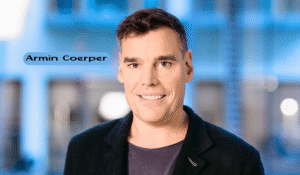


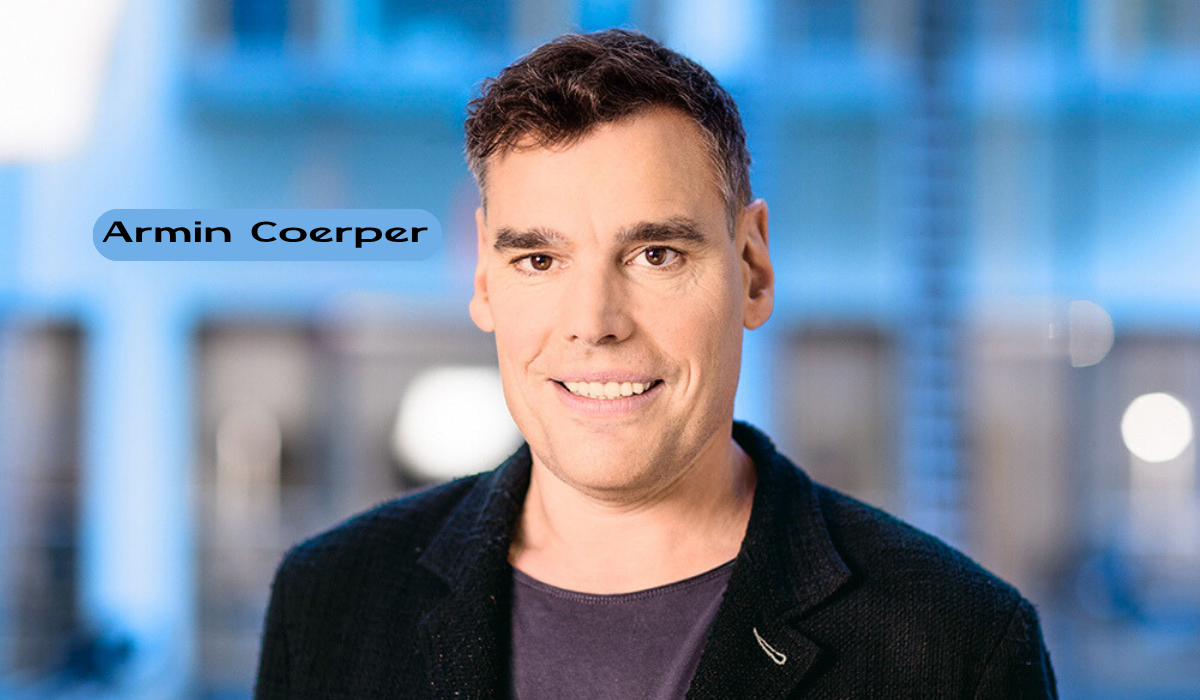
Armin Coerper was born in 1972 in Saarbrücken, a historic city in southwestern Germany known for its cultural depth and cross-border spirit. From an early age, Coerper showed a curiosity about the world beyond his own environment — a curiosity that would eventually shape his life’s direction. He completed his schooling with strong academic results and later decided to study literature and theatre sciences. His university years took him to several places — Marburg, London and Berlin — where he absorbed the intellectual influences of both German and British education. He graduated with a Magister Artium (Master of Arts) from the prestigious Humboldt University of Berlin, a background that refined his analytical mind and sharpened his sense for narrative and detail.
Even as a student, Coerper began to explore journalism through part-time work with ZDF-Morgenmagazin, the German morning news show, and Sender Freies Berlin (SFB), one of the country’s respected regional broadcasters. These early professional encounters gave him an insider’s view of how media works — the deadlines, the adrenaline, and the responsibility that comes with telling the truth. It was a beginning that quietly defined his lifelong relationship with the camera and the story behind it.
The Early Steps of a Career in Journalism
After completing his studies, Armin Coerper joined ZDF in Mainz as a trainee, known in Germany as a “Volontär.” This was the foundation for his full-time journalistic career. By 2001, he was already working as a reporter at ZDF’s regional studio in Düsseldorf, where he covered social, political, and cultural stories from the region of North Rhine-Westphalia. Those years in local journalism were a proving ground — he learned to build trust with sources, to stay composed in front of the camera, and to tell human stories with depth and compassion.
From 2003 onward, Coerper transitioned into ZDF’s central editorial department, where his assignments took him beyond Germany’s borders. By 2005, he had become part of the “Hauptredaktion Aktuelles,” ZDF’s main news division, and began reporting on global events that shaped entire decades. It was during this time that the world began to recognize his name — not for sensational headlines, but for his calm, insightful storytelling from places where most people would hesitate to go.
From Crisis to Calm – Reporting from the World’s Frontlines
Over the following years, Coerper’s work placed him in the middle of some of the most defining crises of the modern era. In 2004, when a massive tsunami devastated Southeast Asia, he was among the journalists who arrived in Sumatra to document the aftermath. His coverage focused not just on the destruction but also on the resilience of survivors. His storytelling avoided sensationalism — instead, it offered empathy, detail, and a sense of connection to the people whose lives had changed forever.
A year later, he found himself in New Orleans after Hurricane Katrina, capturing the scale of human loss and institutional failure that marked the tragedy. Again, his reports stood out for their quiet strength — allowing the images and voices of the victims to speak louder than commentary. In 2005, he reported from London after the terrorist attacks on the underground system, bringing a German audience closer to the reality of fear, mourning, and courage that gripped the city.
Each assignment added another layer to his professional maturity. It became clear that Armin Coerper was not just a reporter; he was a field correspondent in the purest sense — someone who observes, interprets, and communicates the human condition under the pressure of real-time history.
Armin Coerper – Biography Table
| Attribute | Details |
|---|---|
| Full Name | Armin Coerper |
| Date of Birth | 1972 |
| Age | 53 (as of 2025) |
| Place of Birth | Saarbrücken, Germany |
| Nationality | German |
| Education | Magister Artium (MA) in Literature and Theatre Studies, Humboldt University Berlin |
| Occupation | Journalist, Foreign Correspondent |
| Current Role | Head of ZDF Moscow Bureau |
| Previous Roles | Reporter at ZDF Landesstudio Nordrhein-Westfalen, Head of ZDF Warsaw Bureau |
| Notable Coverage | 2004 Sumatra Tsunami, Hurricane Katrina, London Terror Attacks, Russian-occupied Ukraine |
| Style | Calm, empathetic, analytical, and detailed reporting |
| Social Media | Instagram: @armincoerper (low profile) |
| Family | Private/Not publicly disclosed |
| Net Worth | Not publicly available; estimated as senior public broadcaster salary |
| Awards/Recognition | Highly respected in journalism circles; no widely publicized awards |
| Physical Appearance | Tall, composed, professional demeanor |
Leadership Abroad – Warsaw and Moscow
In 2011, after a decade of front-line reporting, Coerper was appointed as the head of ZDF’s Warsaw bureau. From Poland, he covered political developments across Eastern Europe, gaining a deeper understanding of the historical and cultural complexities of the region. His reports reflected not only news updates but also a sense of context — how history, memory, and identity intertwine in the countries between Germany and Russia.
After five years in Warsaw, he returned to Berlin to join the investigative program “frontal,” where he contributed to deeper analytical pieces rather than breaking news. But in 2023, he took on one of the most challenging positions in German journalism: head of ZDF’s Moscow bureau. This role placed him at the center of one of the most sensitive geopolitical regions in the world, responsible for covering not only Russia but also neighboring nations in the Caucasus and Central Asia. Working in Moscow during a time of war and political tension required balance, restraint, and immense professional courage. Few correspondents can operate effectively under such conditions — Coerper is one of them.
A Journalist’s Style and Philosophy
Armin Coerper’s reporting is defined by simplicity, accuracy, and depth. Unlike some reporters who rely on emotional dramatization, Coerper has built his reputation on clarity and observation. His background in literature has given him an instinct for storytelling, and his theatre studies seem to inform the way he structures narrative — with timing, presence, and rhythm. He tends to avoid editorializing; instead, his tone is steady and analytical, leaving viewers room to draw their own conclusions.
Colleagues often describe him as calm under pressure and deeply meticulous. He believes that every story should serve a public purpose — to inform, to explain, or to humanize — rather than simply to shock or entertain. In a world where speed often overtakes accuracy, Coerper’s deliberate pace and thoughtful perspective stand as a reminder that journalism is not just about being first, but about being right.
Appearance, Age, and Presence
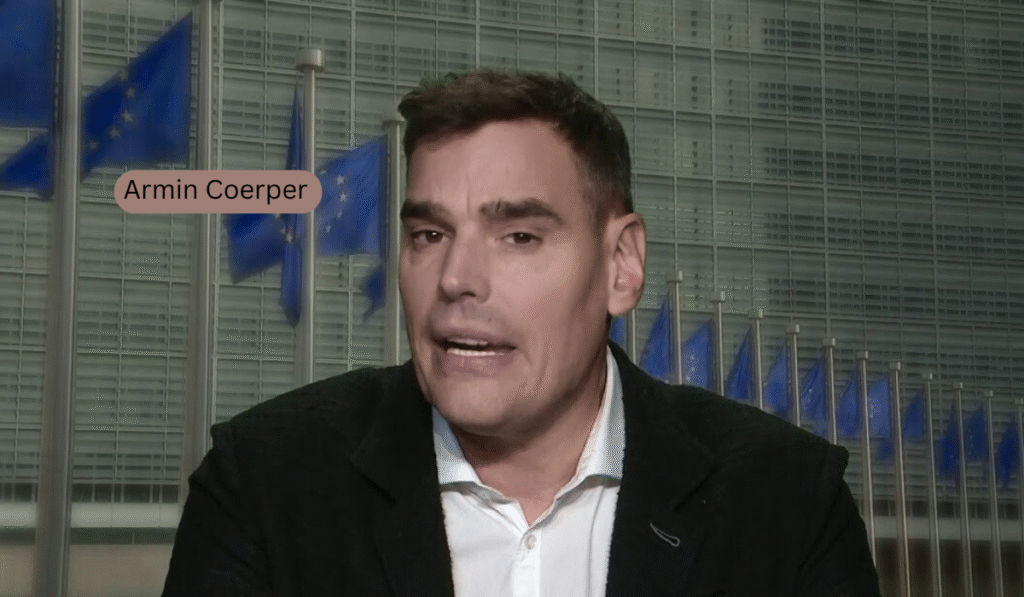
At 53 years old, Armin Coerper carries the quiet dignity of someone who has seen much of the world — the pain, the joy, the absurdity, and the resilience of humanity. He has a tall, composed presence, with sharp features and the calm demeanor of a man comfortable both in front of the camera and behind it. His professional image reflects modesty rather than celebrity; he dresses in neutral tones, often in field-ready attire rather than the formal suits of studio anchors.
His physical appearance — steady gaze, calm gestures, and measured speech — contributes to his credibility. Viewers find him trustworthy, not because he tries to impress, but because he never seems to force emotion or exaggeration. His delivery is that of someone who has learned to let truth speak for itself.
Private Life and Family
Despite his long presence in the public eye, Armin Coerper keeps his private life almost entirely out of the media. He has never sought personal fame and rarely gives interviews about his life beyond work. While details about his family remain private, it’s known that he values discretion and distance from the celebrity culture that often surrounds journalists today.
Friends and colleagues describe him as modest and thoughtful, someone who enjoys culture, travel, and history. His years abroad have given him an appreciation for languages and intercultural understanding, but above all, he values authenticity — both in his work and in his personal relationships. That discretion has earned him respect in a field often filled with self-promotion.
Professional Recognition and Net Worth
Although Armin Coerper has not been widely publicized as an award-winning journalist, his consistent record of high-quality reporting has earned him a strong reputation within Germany’s media community. He has become one of ZDF’s most trusted correspondents, particularly in politically sensitive regions. His position as bureau chief in Moscow is itself an indication of ZDF’s confidence in his judgment and professionalism.
As for his net worth, there are no official figures available. However, senior foreign correspondents for public broadcasters typically enjoy a stable and respected income, reflecting their experience and risk level. Beyond finances, Coerper’s “worth” lies in his credibility — a currency that no amount of money can substitute in journalism.
Recent Challenges and Controversies
In early 2024, Coerper faced public scrutiny for a report he produced from the Russian-occupied Ukrainian city of Mariupol. Some critics claimed the segment understated the harsh realities of occupation, while others defended it as a rare glimpse inside a city largely closed to foreign media. The debate underscored the difficulty of reporting from areas under strict control, where journalists must balance access, safety, and truth.
Coerper, for his part, has remained composed throughout such controversies, emphasizing that journalism must show what exists — even if what exists is uncomfortable or incomplete. His response showed the maturity of a correspondent who understands that criticism is an inevitable companion of truth-telling. For him, transparency and context remain non-negotiable principles.
Legacy and Influence
Armin Coerper represents a generation of journalists who believe that integrity is not an accessory but a foundation. His career demonstrates that success in journalism is not measured by fame or viral moments, but by consistency, courage, and credibility. For over two decades, he has been a bridge between distant events and the living rooms of German audiences — a human conduit of truth in a world saturated with noise.
Younger journalists often look up to him as an example of professionalism under pressure. He proves that it’s possible to tell difficult stories without losing compassion and to remain objective without losing humanity. In an era of social media sensationalism, Coerper’s work reminds us that good journalism still matters — that the calm, measured voice is sometimes the most powerful of all.
Conclusion
Today, Armin Coerper stands as one of the most seasoned and respected correspondents in German media. His decades of experience, his intellectual discipline, and his field expertise have made him a cornerstone of ZDF’s global coverage. From the tsunami-ravaged shores of Indonesia to the political corridors of Moscow, his journey embodies the essence of international journalism: courage, curiosity, and conscience.
In every sense, Coerper represents the enduring spirit of reporting — a profession built on the belief that the world deserves to be understood, not just observed. Whether covering wars, disasters, or the silent shifts of history, he continues to prove that the best journalists are not those who shout the loudest, but those who listen the most.
FAQs
1. Who is Armin Coerper?
Armin Coerper is a German journalist and foreign correspondent, currently serving as the head of ZDF’s Moscow bureau. He is known for his calm, insightful reporting from global conflict zones.
2. Where was Armin Coerper born?
He was born in 1972 in Saarbrücken, Germany, and grew up with a passion for literature, culture, and world affairs.
3. What is Armin Coerper famous for?
He is best known for his on-the-ground coverage of major international events like the 2004 tsunami, Hurricane Katrina, and political developments across Eastern Europe.
4. Does Armin Coerper use social media?
Yes, he has an Instagram account, though he maintains a low profile and rarely shares personal details online.
5. What makes Armin Coerper’s journalism unique?
His storytelling combines empathy, accuracy, and professionalism, reflecting a deep respect for truth and the people behind the stories he covers.